
Protect the longevity and integrity of your prestressed and post-tensioned structures with advanced inspection and evaluation services.
Prestressed and post-tensioned structures are at risk of issues like poor grouting, moisture ingress, and chloride attacks. These issues are difficult to identify through standard inspection methods and often cause significant damage before they’re discovered. The results can be dangerous and costly.
We offer a range of inspection and evaluation services— measuring cable tension in unbonded tendons and non-destructive testing to locating grouting defects and determining the risk for corrosion along a tendon. We help identify potential problems early and take corrective action to ensure the longevity and integrity of their post-tension structures.
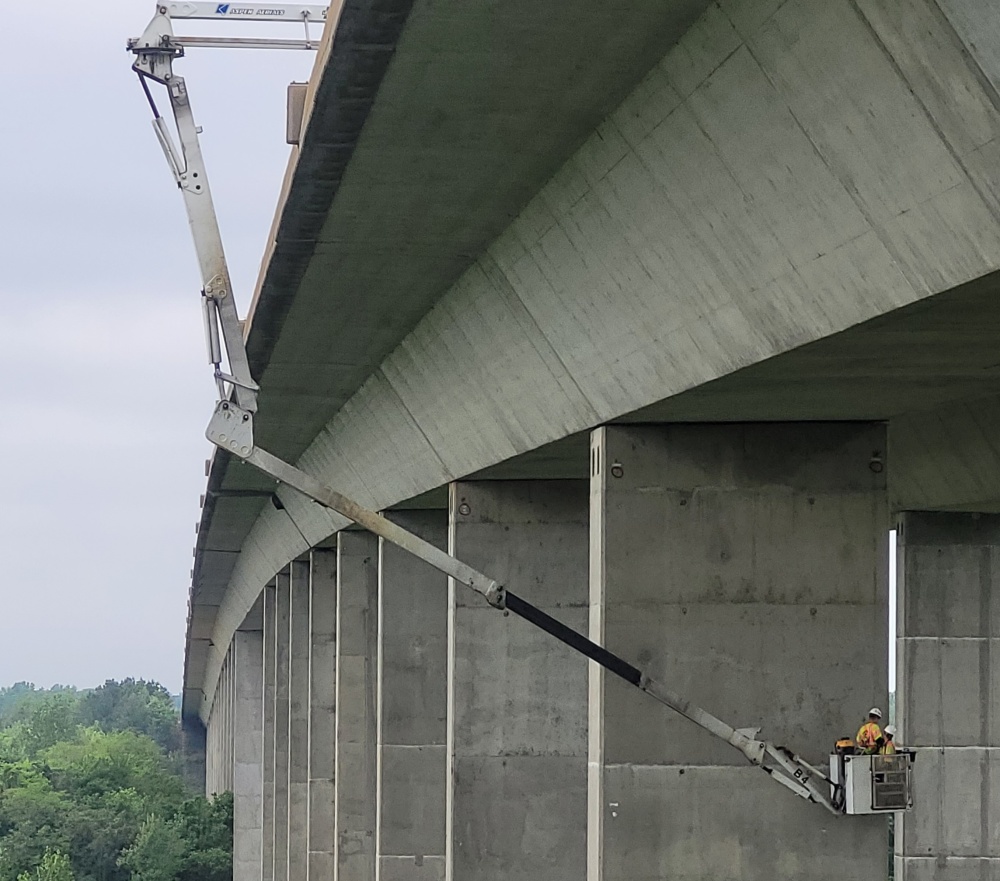
Methods
Our experts will help you determine which methods are most effective and economical for your needs.
Grout Void and Defect Identification
Inspection of Internal Post-Tensioning
To inspect the condition of internal PT, the acoustic test method Impact Echo (IE) is used to determine if the PT tendons have any grout defects like voids or soft grout. IE/PV measures the resonant frequency of an induced stress wave over the PT tendon. If the PT duct is voided or undergoes changes in material properties due to soft grout, then the path of the wave increases and lowers the resonant frequency. Therefore, measuring the resonant frequencies along a PT tendon can be used to locate these grout defects.
Inspection of External PT
We use the Pulse Velocity method to determine the existence of grout defects along external tendons. This method involves placing an energy input device and a receiver on either side of the duct to detect any defects in the grouting, such as voids, water, and soft grout. Then, we interpret the PV signal to locate these defects.
Borescope Inspection
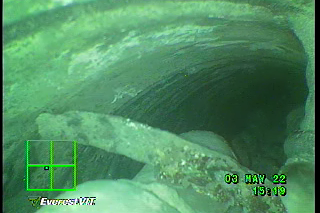
After locating potential PT defects, such as soft grout or voiding, a small opening is drilled into the tendon ducts to allow for borescope inspection of the tendon condition. Borescope inspection allows for visual inspection of the voids with minor physical impact on the PT. For example, if our team identifies grout defects such as soft grout, we can make larger window openings to collect grout samples for laboratory testing.
Corrosion Evaluation of Post-Tensioning
The Post-Tech Corrosion Evaluation (PTCE) method measures the moisture content along the PT tendons to evaluate the risk of corrosion. It involves injecting dry gas at an IN port and measuring the moisture content of the gas at a distant OUT port to evaluate the moisture content of the air within the PT tendons. We use our PTCE formulas to determine the risk of corrosion based on the moisture content of the tendon air.
Acoustic Inspection Methods
We conduct the acoustic evaluation of concrete pipe using Impact Echo/Pulse Velocity (IE/PV) testing. We use compressional and shear wave transmission velocity values to determine the mechanical characteristics of concrete. VCS can use testing along a pipeline to identify areas with reduced pipeline wall thickness or a loss of pre-stressing stress. This testing helps owners manage their assets and prevent costly failures.
Project Experience
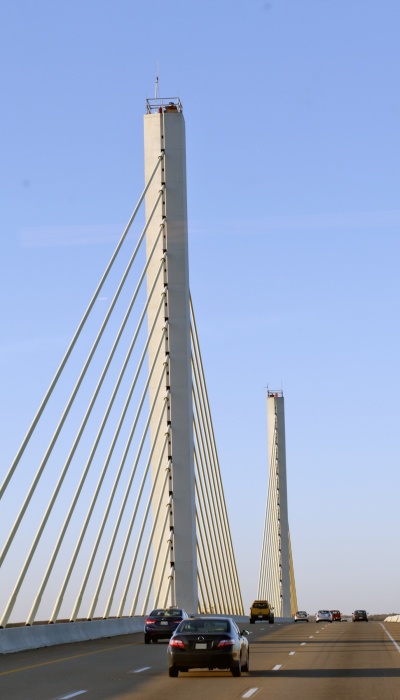
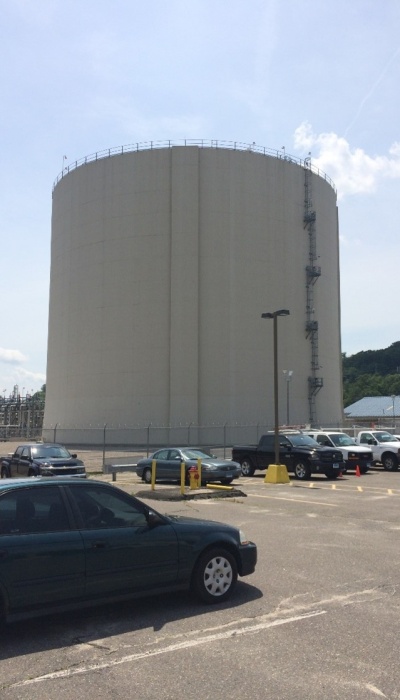
We provide extensive experience across a range of structures and environmental conditions.
Where it Applies
Service offerings are relevant across these sectors.